- Devprayag Sangam
- Amar Kalpvriksh, Jyotirmath
- Things to Do in Devprayag
- Rishikesh to Joshimath
- Auli Hill Station
- Raghunath Temple Devprayag
- Rishikesh to Devprayag
- Tapovan Hot Springs
- Devprayag Tourist Places You Shouldn’t Miss on Your Uttarakhand Trip
- Travel from Delhi to Joshimath
- Joshimath's Spiritual Heritage
- How to Reach Joshimath
- Joshimath to Valley of Flowers
- Joshimath to Hemkund Sahib
- A Guide on How to Reach Joshimath
- Travelling to Badrinath from Joshimath
- Narsingh Temple Joshimath: A Sacred Haven of Lord Narsimha
- Skiing in Auli
- Places to Visit in Joshimath
- Joshimath Trekking Destinations
- Adventure Camping in Joshimath
Rishikesh to Joshimath: A Sacred Road Through the Soul of the Himalayas
Nestled at an altitude of over 6,000 feet in the Chamoli district of Uttarakhand, Joshimath is no ordinary hill town. It is a place where snow-draped peaks pierce the clouds, ancient monasteries hum with prayer, and the air carries the scent of pine and possibility. Gateway to some of India's most hallowed pilgrimage sites, such as Badrinath, Hemkund Sahib, and the Valley of Flowers, Joshimath has long cast a spell on pilgrims and wanderers alike. There is a quiet grandeur to this town, a sense that you are standing at the very threshold of the divine.
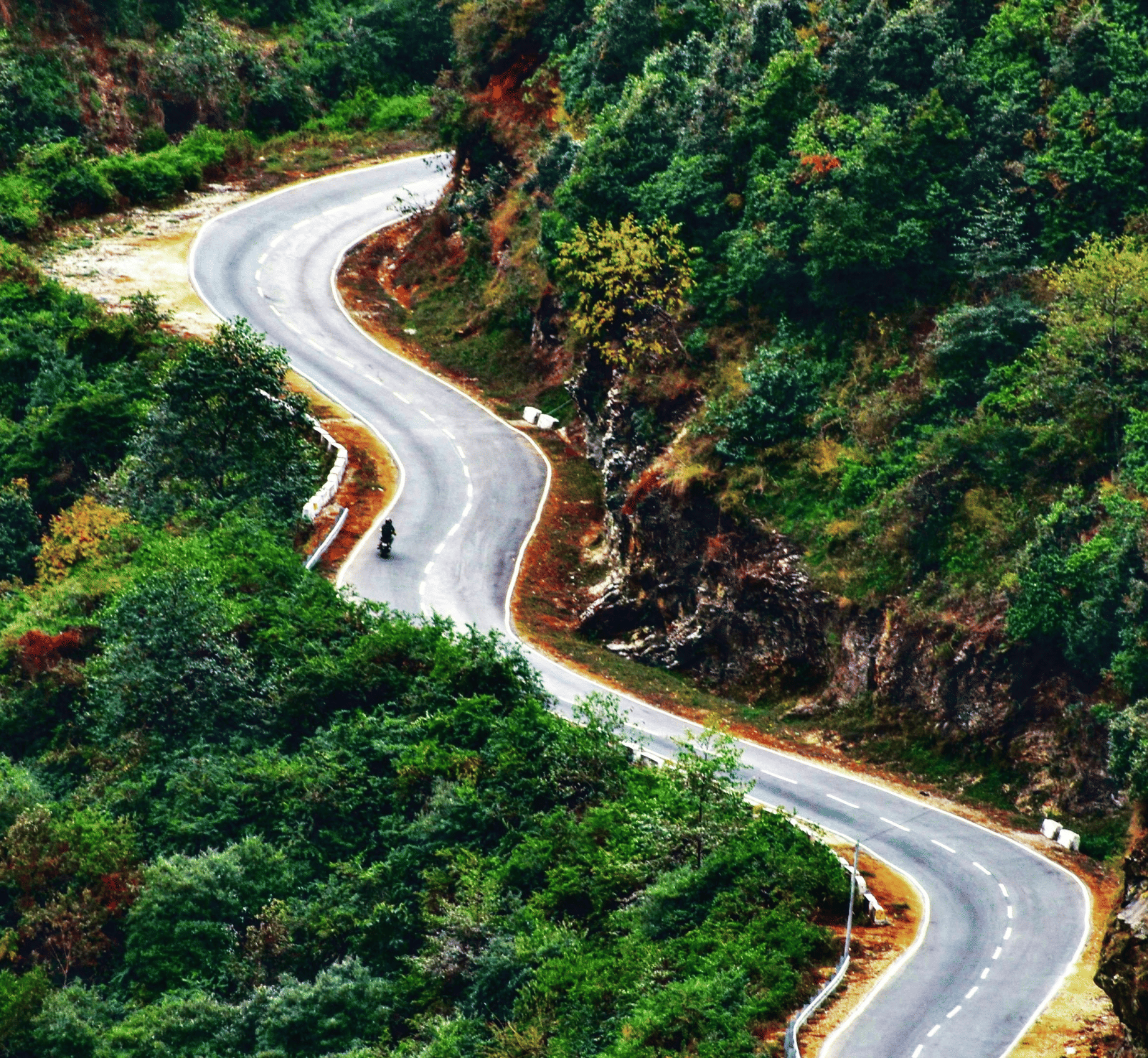
But to arrive at Joshimath is only half the story. The journey from Rishikesh to Joshimath is, in itself, a magnificent odyssey. One that winds through emerald valleys, roars past glacial rivers, and pauses at sacred confluences that have stirred the human spirit for centuries. It is a route that pilgrims have walked, poets have wept over, and travellers have dreamt about long after returning home. This is a journey that does not merely take you somewhere; it transforms you along the way. Let us see how you can make the very best of it!
The 5 Sacred Confluences: Witnesses to Your Journey
One of the most extraordinary gifts of the Rishikesh to Joshimath route is the Panch Prayag. It translates to the 5 holy confluences of rivers, each one a place of immense spiritual and natural beauty. In Hinduism, a prayag (confluence) is considered deeply sacred, and these 5 together form a celestial rosary threaded along the course of the mighty Alaknanda river. As you wind through the mountain roads, each prayag appears like a chapter in a living epic.


Devprayag:
The first and perhaps the most celebrated, Devprayag, is where the turquoise Alaknanda meets the jade-green Bhagirathi. Together, they are reborn as the Ganga. Standing at this confluence, watching the 2 rivers surrender their identities to become one, is a moment of extraordinary beauty. This is where the sacred Ganga begins.
Rudraprayag:
Named for Lord Shiva, this dramatic confluence sees the Alaknanda receive the waters of the Mandakini, which descends from the glacial heights of Kedarnath. The town perched above the merging rivers carries a wild, mythic energy.
Karnaprayag:
Legend holds that Karna, the great warrior of the Mahabharata, performed his daily sun worship at this very spot. Here, the Alaknanda is joined by the Pindar River, which flows in from the Pindari Glacier. The confluence is serene and deeply picturesque.
Nandaprayag:
A quieter, lesser-visited prayag, this is where the Nandakini River meets the Alaknanda. There is a stillness here, a contemplative beauty that feels almost forgotten by the modern world and hence, all the more precious for it.
Vishnuprayag:
The final prayag before arriving at Joshimath, and the highest of the 5, Vishnuprayag, is where the Dhauliganga cascades down to meet the Alaknanda in a churning, dramatic embrace. Framed by towering cliffs, this confluence announces that you are nearly at the roof of your world.


How to Reach Joshimath from Rishikesh
The distance from Rishikesh to Joshimath is approximately 250 km, which translates to a road journey of roughly 8 to 10 hours. Though the hours are long, they pass in a cascade of views so breathtaking that you will find yourself wishing the road would never end. There are several ways to make this journey, each with its own character:
Rishikesh to Joshimath Bus:
The most economical option, and one well-used by pilgrims and locals alike. The Uttarakhand State Transport (UTSRTC) operates regular buses on this route from Rishikesh's main bus stand. Buses typically depart in the early morning hours, with the journey taking 10 to 12 hours, given scheduled stops. Fares are approximately INR 400 to INR 600 per person.
Taxis & Private Cabs:
For comfort and flexibility, hiring a private taxi or cab is an excellent choice. A one-way taxi from Rishikesh to Joshimath would cost about INR 3,000 to INR 5,000, depending on the vehicle type. The journey takes around 8 to 9 hours, and the advantage is that you may stop as you please at the Panch Prayags, roadside chai stalls, or simply wherever the view demands it.
Shared Jeeps & Sumos:
A popular middle ground, shared Sumo jeeps depart from Rishikesh and make the journey in approximately 9 to 10 hours, with stops at key towns along the way. Cost per seat is typically INR 600 to INR 900. They fill quickly during the pilgrimage season, so an early start is advisable. A lively, sociable, and wonderfully local experience, perfect if you are a solo traveller.

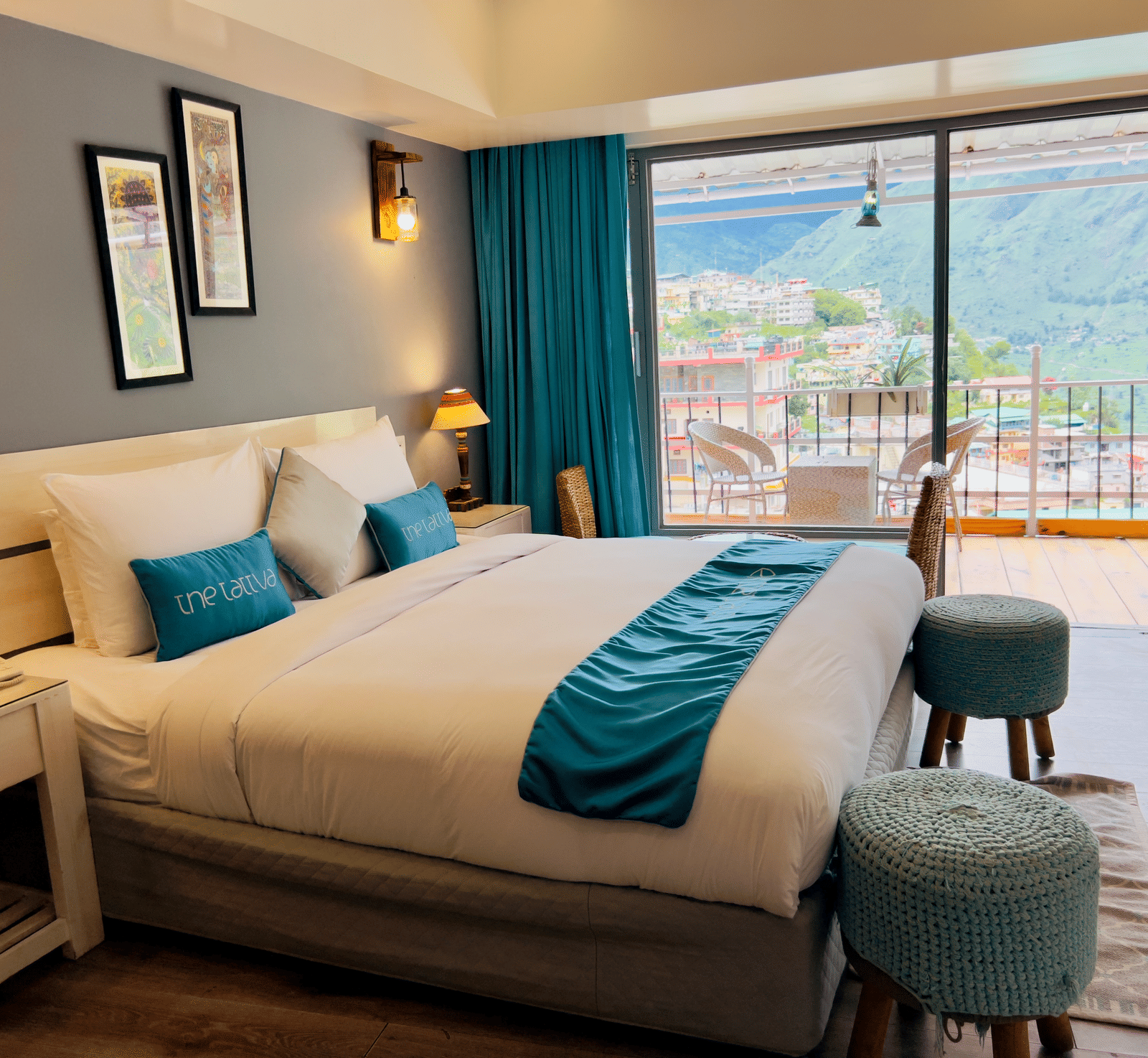
Your Himalayan Home: The Tattva, Joshimath
After a day of mountain roads and sacred confluences, there is nothing quite like arriving at a place that feels like it was made for moments like this. The Tattva, Joshimath, is precisely that. A sanctuary of comfort and calm, perched amidst the peaceful grandeur of the Himalayas.
- Scenic Setting: Perched amidst the tranquil beauty of the Himalayas, the resort offers breathtaking views that transform every morning into a memorable experience.
- Comfortable & Elegant Rooms: Thoughtfully designed spaces with stunning valley and mountain views, warm and inviting, perfect for unwinding after a day in the Himalayas.
- Dining Experiences: Enjoy a selection of multi-cuisine dishes, blending Indian and international flavours. Ideal for refuelling after your mountain adventures.
- Trekking & Exploration: Discover the Himalayas up close with curated trekking experiences through meadows, ridges, and scenic trails.
The road from Rishikesh to Joshimath is among the most scenic mountain routes. It is a journey of sacred rivers and ancient stones, of air that grows cleaner with every mile climbed, and of landscapes that seem to belong to another, more beautiful era. It is a journey too good, too rare, and too alive to leave unattempted. Make The Tattva, Joshimath, a true gem nestled in the heart of the Himalayas, your home on this journey, and let it be the beginning of your love affair with the high Himalayas. Whether you are a pilgrim seeking the divine, a traveller chasing the horizon, or simply someone who needs the mountains, this route will give you far more than you arrive looking for. So start packing, the Himalayas are waiting.
FAQs
1. How far is Joshimath from Rishikesh, and how long does the journey take?
Joshimath is nearly 250 km from Rishikesh by road. Given the winding mountain terrain, the journey typically takes between 8 and 12 hours, depending on your mode of transport.
2. Are there direct buses from Rishikesh to Joshimath?
Yes, UTSRTC operates direct buses on the Rishikesh to Joshimath bus route, departing from the main Rishikesh bus stand. Buses typically leave in the early hours of the morning. It is advisable to book early, especially during the pilgrimage season.
3. What are the alternatives to taking a bus from Rishikesh to Joshimath?
You can hire a private taxi or cab (costing around INR 3,000 to INR 5,000 one-way), or opt for a shared Sumo jeep ride (roughly costing INR 600 to INR 900 a journey).
4. Can I visit the Panch Prayag as stops along the way?
Absolutely! Most of the Panch Prayag (Devprayag, Rudraprayag, Karnaprayag, Nandaprayag, and Vishnuprayag) are located directly on or very close to the main highway, making them natural stopping points.
5. Where should I stay in Joshimath for a comfortable and memorable experience?
The Tattva, Joshimath, is the perfect base offering comfortable rooms, multi-cuisine dining, guided trekking, and warm hospitality, all wrapped in the serene beauty of the Himalayas.
6. What is the best time of year to travel from Rishikesh to Joshimath?
The route is at its finest between May and June, and again from September to November. The skies are clear, the roads are open, and the landscapes are at their most dramatic.
7. Is the Rishikesh to Joshimath route open year-round?
Not entirely. Heavy snowfall between December and March can disrupt travel, with certain stretches becoming difficult or temporarily closed. The summer and post-monsoon months remain the most reliable windows for a smooth and scenic journey.