- Devprayag Sangam
- Amar Kalpvriksh, Jyotirmath
- Things to Do in Devprayag
- Rishikesh to Joshimath
- Auli Hill Station
- Raghunath Temple Devprayag
- Rishikesh to Devprayag
- Tapovan Hot Springs
- Devprayag Tourist Places You Shouldn’t Miss on Your Uttarakhand Trip
- Travel from Delhi to Joshimath
- Joshimath's Spiritual Heritage
- How to Reach Joshimath
- Joshimath to Valley of Flowers
- Joshimath to Hemkund Sahib
- A Guide on How to Reach Joshimath
- Travelling to Badrinath from Joshimath
- Narsingh Temple Joshimath: A Sacred Haven of Lord Narsimha
- Skiing in Auli
- Places to Visit in Joshimath
- Joshimath Trekking Destinations
- Adventure Camping in Joshimath
Places to Visit in Joshimath: Where to Go and What to Do
If you're planning a Himalayan getaway, the places to visit in Joshimath make it one of the most rewarding base towns in Uttarakhand. Perched at 1,875 m in the Garhwal Himalayas, in the Chamoli district, this sacred town was established by Adi Shankaracharya as one of the 4 cardinal ‘maths’ in the 8th century—and today it's the gateway to some of the most spectacular sightseeing in the state, from snow-clad Auli to the Valley of Flowers. Whether you have a weekend or a week, here's a complete guide for your upcoming Joshimath trip.
Auli Hill Station
Uttarakhand's premier ski meadow at approximately 3,000 m, ringed by views of Nanda Devi, Kamet, and Mana Parvat; green and popular for short treks in summer and monsoon. See our full Auli Hill Station guide.
Visiting details:
- Distance from Joshimath Town Centre: ~13 km
- Travel Time: ~30 minutes by taxi
- Best Time to Visit: December to March for skiing; April to June and September to October for clear-weather meadow walks
- Cost: Free to enter (skiing/chairlift activities charged separately)


Narsingh Temple
The spiritual heart of Joshimath. Lord Narasimha, an incarnation of Vishnu, is the presiding deity, and local tradition holds that in winter, when the Badrinath Temple closes, its deity is ceremonially moved here. See our Narsingh Temple guide.
Visiting details:
- Distance from Joshimath City Centre: ~11 km
- Travel Time: ~20-25 minutes by road
- Best Time to Visit: Year-round; especially significant in winter, when the Badrinath deity is ceremonially moved here
- Cost: Free entry
Kalpavriksha & Jyotirmath
A mulberry tree below the main market is believed to be well over a thousand years old and, by local belief, capable of granting wishes; Adi Shankaracharya is said to have meditated on Lord Shiva at its base, where the Jyoteshwar Mahadev Temple now stands, and the small cave where he's believed to have lived is nearby.
Visiting details:
- Distance from Joshimath City Centre: In the town itself, below the main market
- Travel Time: ~10 minutes on foot
- Best Time to Visit: Anytime during daylight hours
- Cost: Free entry


Nanda Devi National Park
A UNESCO World Heritage Site prized for its biodiversity, Nanda Devi National Park protects rare high-altitude flora and fauna, including snow leopards, the mainland serow, and the Himalayan musk deer.
Visiting details:
- Distance from Joshimath City Centre: ~18 km
- Travel Time: ~34 minutes by road
- Best Time to Visit: May to October (largely inaccessible under winter snow)
- Cost: Restricted-zone entry permit required for the core area. Arrange in advance through a local operator or forest office
Auli Lake (Chattrakund)
One of the highest artificial lakes in the world, doubling as a reservoir for Auli's snow-making machines in the ski season, is ringed by conifer forest with the Himalayas as a backdrop.
Visiting details:
- Distance from Joshimath City Centre: ~13 km
- Travel Time: ~36 minutes by road
- Best Time to Visit: Year-round; most scenic just after snowfall (December to February) or in monsoon-fresh greenery (July to September)
- Cost: Free entry

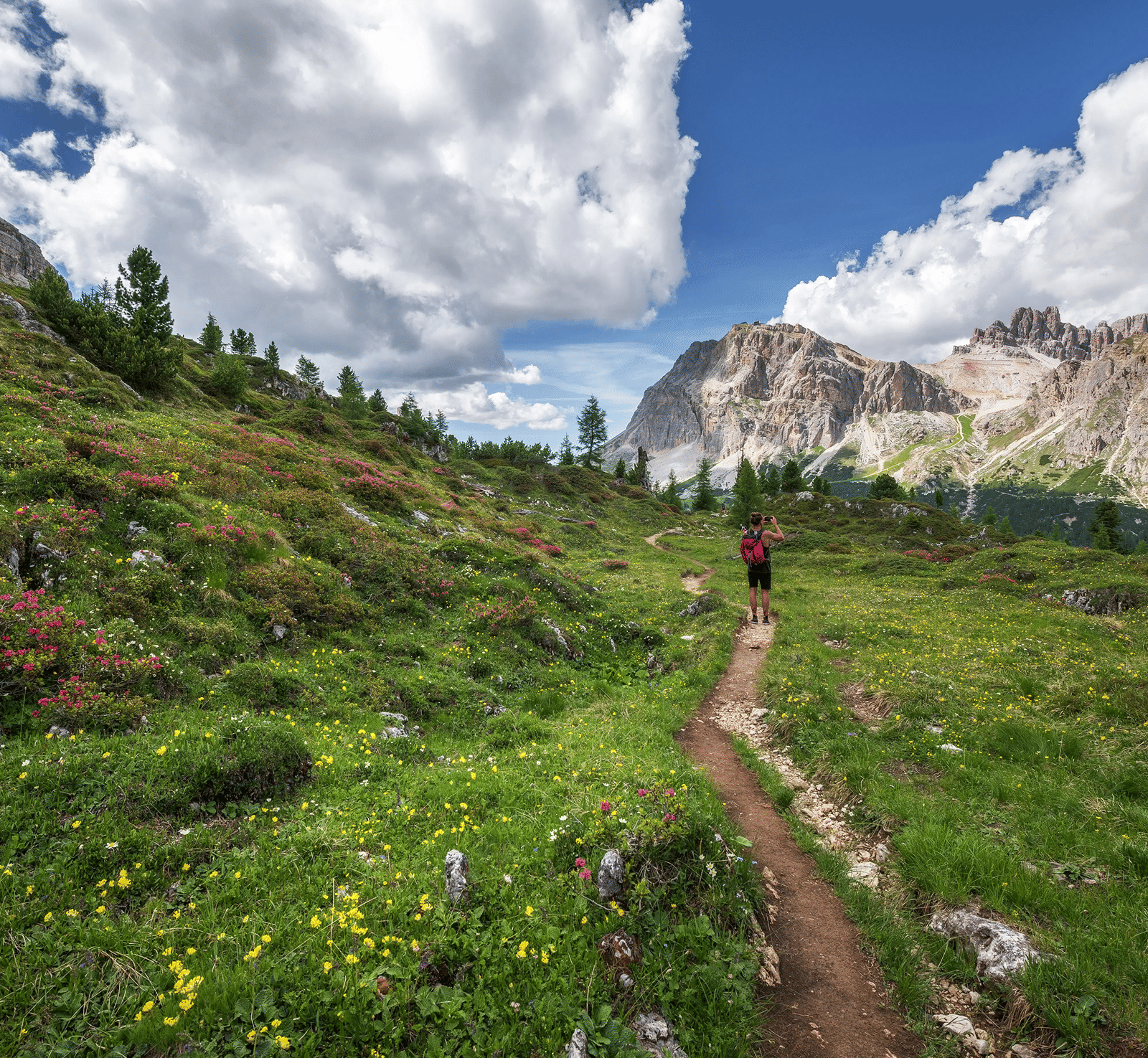
Valley of Flowers
The single best reason to base yourself in Joshimath if you trek. A UNESCO World Heritage Site since 2005 (an extension of the Nanda Devi Biosphere Reserve) at ~3,600 to 4,300 m, it bursts into hundreds of species of alpine flowers through the monsoon months and is rated a moderate trek. See the full route breakdown in our Joshimath to Valley of Flowers guide.
Visiting details:
- Distance from Joshimath City Centre: ~20 km to Govindghat, then a trek via Ghangaria (same trailhead as Hemkund Sahib)
- Travel Time: Full-day trek from Govindghat; most visitors overnight in Ghangaria
- Best Time to Visit: July to August for peak bloom (park typically open June to October)
- Cost: Nominal park entry ticket, payable at Ghangaria.
Tourist Places Near Joshimath
Beyond the town itself, this is the launch point for some of the most rewarding Joshimath tourist places—Uttarakhand's most iconic pilgrimage and trekking destinations. The same 4 details apply below, so you can weigh a day trip against a multi-day one at a glance.
Bagini Glacier
One of the more offbeat places to visit near Joshimath: a moderate trek from Dronagiri Village, with a base camp at about 4,484 m and the glacier itself at around 14,816 ft. The trail winds through classic Himalayan flora—rhododendron, blue spruce, and pine forest—before opening onto glacial terrain and suits trekkers with some high-altitude experience or a guide.
Visiting details:
- Distance from Joshimath City Centre: Trek begins at Dronagiri Village, roughly a 2-hour drive away.
- Travel Time: Multi-day trek (Allow 3-4 days round trip to base camp.)
- Best Time to Visit: May to June and September to October, outside the monsoon and heavy-snow windows
- Cost: No standard entry fee; guide and permit costs vary as they are arranged locally


Badrinath Temple
One of India's most sacred Char Dham temples and a natural extension of any Joshimath trip, the road climbs through narrow mountain stretches with regulated one-way traffic windows at checkpoints, so it's worth setting off early. If you're combining Joshimath with Badrinath, read our dedicated guide to travelling from Joshimath to Badrinath.
Visiting details:
- Distance from Joshimath City Centre: ~43 km
- Travel Time: ~1.5 hours by road (occasionally longer in peak season or bad weather)
- Best Time to Visit: May to June and September to October (temple open late April/early May through October to November)
- Cost: Free entry; shared transport from Joshimath costs roughly INR 100 one way
Hemkund Sahib
A striking Sikh gurudwara beside a glacial lake at around 4,329 m, usually combined with a Valley of Flowers trip since both start from the same trailhead. For the full route breakdown, see our Joshimath to Hemkund Sahib guide.
Visiting details:
- Distance from Joshimath City Centre: ~20 km to Govindghat, then a ~20 km trek via Ghangaria (~14 km to Ghangaria, then a steeper 6 km climb)
- Travel Time: 45 minutes to 1 hour by road to Govindghat, then 6 to 8 hours trekking
- Best Time to Visit: June to September/October only, as heavy snow closes the route the rest of the year
- Cost: Free entry to the gurudwara; porter or pony hire is optional and priced locally

Things to Do in Joshimath Beyond Sightseeing
Sightseeing is only half the story. If you want to go deeper, Joshimath is also a genuine base for adventure: multi-day treks into the Nanda Devi buffer zone and Bagini/Kuari Pass country, and high-altitude camping under some of the clearest night skies in the Garhwal Himalayas. We've covered both in dedicated guides—Joshimath Trekking Destinations for route-by-route trekking details, and Adventure Camping in Joshimath for campsite options, so if trekking or camping are more like your things to do in Joshimath, start there.

Best Time for Joshimath Sightseeing
- May to June: Warm days, clear mountain views; Badrinath and Hemkund Sahib are both open. It is one of the best windows for general Joshimath sightseeing.
- July to August (Monsoon): The Valley of Flowers is in full bloom, but road conditions can be unpredictable, so build in buffer days.
- September to October: Post-monsoon clarity, good for temples, treks, and photography alike.
- December to March (Winter): Auli's skiing season and snow views, but high-altitude sites like Hemkund Sahib, and the Valley of Flowers are closed.
The Tattva: Your Best Base for Exploring Joshimath
Once you've mapped out your Joshimath sightseeing, where you stay matters just as much as where you go. The Tattva, Joshimath, sits right in Joshimath, just within walking distance from the Auli Ropeway base station, putting you within easy reach of everything on this list—Narsingh Temple, Kalpavriksha, Auli, and the road routes to Badrinath and Hemkund Sahib. Explore our local landmarks from The Tattva, Joshimath:
- Auli Hill Station: ~16 km
- Narsingh Temple: ~11 km
- Kalpavriksha & Jyotirmath: Walkable from the resort, below the main market
- Nanda Devi National Park: ~18 km
- Auli Lake (Chattrakund): ~10 km
- Valley of Flowers: ~20 km to Govindghat, then a trek
- Bagini Glacier: ~2-hour drive to the trailhead, then a trek
- Badrinath Temple: ~43 km
- Hemkund Sahib: ~20 km to Govindghat, then a trek


After a day of sightseeing or trekking, come back to rooms with valley-view balconies and heated beds designed for the Himalayan cold. Dine at Alpenrose, our multi-cuisine restaurant, or wind down at The Bourbon Lounge—the only bar on the stretch from Rishikesh to Badrinath. Mornings start with yoga against the mountains, and evenings often end around a bonfire. For guests moving fast through a packed itinerary, our 2-hour express laundry and in-house cab facility take the logistics off your plate, so you can spend more time at the places you came to see and less time arranging how to get there.
Where the Mountains Begin: A Traveller's Guide to Joshimath
From ancient maths to alpine meadows, the places to visit in Joshimath cover more ground than most Himalayan towns twice its size. Whether you're drawn to the spirituality of Narsingh Temple and Kalpavriksha, the adventure of Bagini Glacier and Kuari Pass, or the pilgrimage pull of Badrinath and Hemkund Sahib, the best things to do in Joshimath suit both 2-day sightseers and week-long trekkers.
Add nearby highlights like Auli's ski slopes, the Valley of Flowers, and Nanda Devi National Park, and it's easy to see why this small town punches above its weight. Timing is key, so plan around the season that matches your interests, add buffer days during monsoon, and choose a base close to the sights. With The Tattva, Joshimath, as your starting point, the logistics take care of themselves, leaving you free to focus on the mountains.
FAQs
What are the top places to visit in Joshimath?
The top places to visit in Joshimath include Auli, Narsingh Temple, Kalpavriksha, Nanda Devi National Park and Auli Lake in town, plus Badrinath, Hemkund Sahib, and Bagini Glacier as nearby day or multi-day trips.
What is there to do in Joshimath in winter?
Winter (December-March) means skiing at Auli, plus temple visits—Hemkund Sahib and the Valley of Flowers stay closed under snow until summer.
How many days are enough for Joshimath sightseeing?
2 to 3 days cover the main places to visit in Joshimath; add a day or two more if you're including Badrinath, Hemkund Sahib or a trek like Bagini.
How far is Auli from Joshimath?
About 15-16 km by road (~45 minutes). The ropeway route is shorter at ~4 km but is currently closed.
What is Joshimath famous for?
It's the winter seat of the Badrinath deity and one of Adi Shankaracharya's four cardinal maths, as well as the main gateway to Auli, the Valley of Flowers, Hemkund Sahib, and Badrinath Temple.
How do I reach Joshimath?
By air via Dehradun's Jolly Grant Airport, by rail via Rishikesh, or by road along the Rishikesh-Badrinath highway (8 to 10 hours).
Where to stay when visiting the places in Joshimath?
Stay at The Tattva, Joshimath, where the hotel offers comfortable rooms with stunning Himalayan views, a restaurant serving delicious meals, and thoughtful amenities like free parking, Wi-Fi, and a travel desk. Conveniently located near Auli, the Joshimath Ropeway, and the Badrinath route, it's the perfect base for your mountain getaway.